Thinking about Covid and Tu B’shvat.
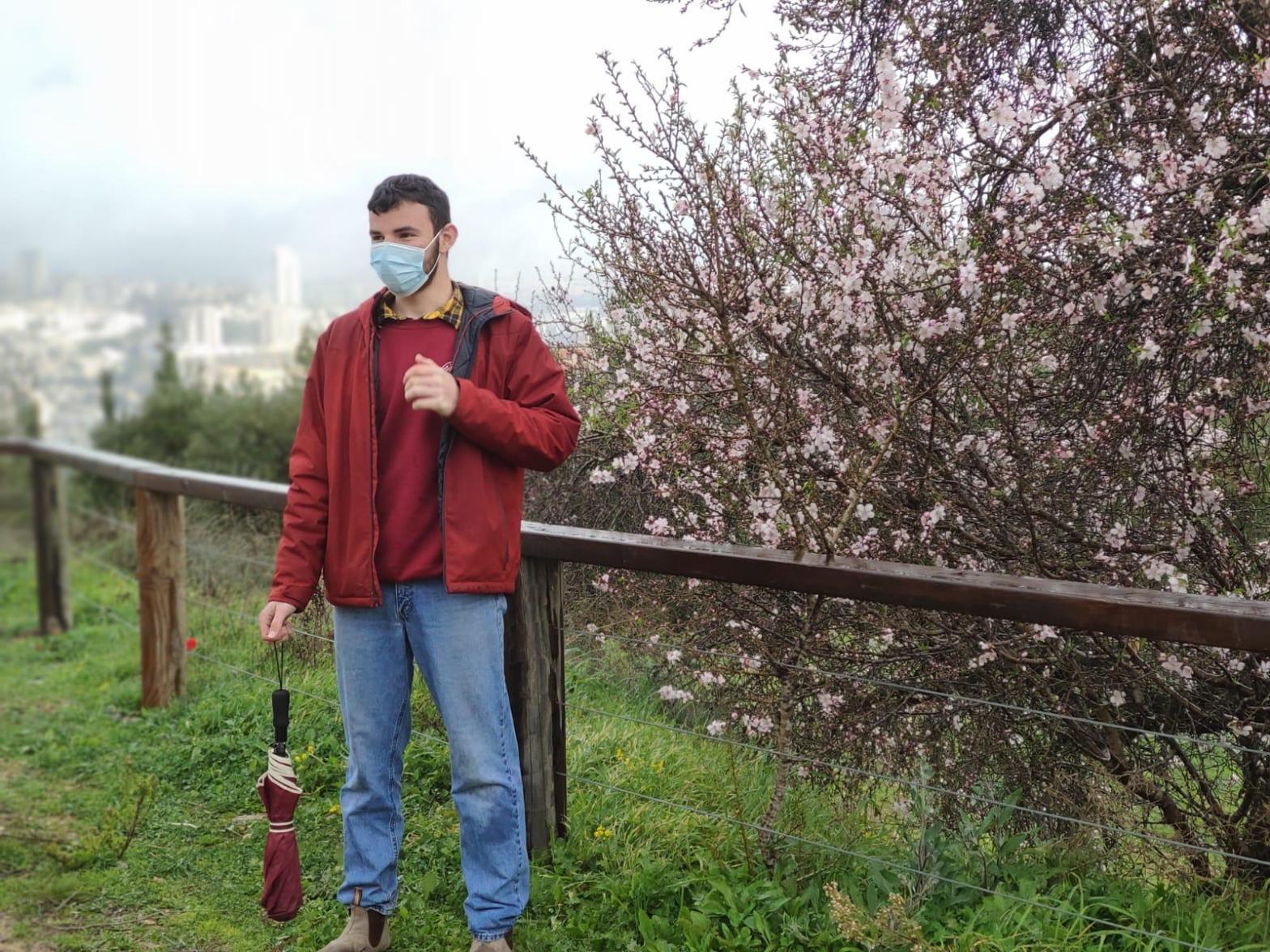
Its the new year for trees, and in Israel, the tree most associated with the holiday is the Shakedia, the almond tree. My son M has been volunteering on a nature reserve and sent us this picture.Tu B’shvat is the beginning of the end. The beginning of the end of the rainy season, when the trees drink their fill and begin to flower.
While the rainy season is good for trees, for people–or this person, at least–day after day of rain leads to a quiet desperation, especially on week 3 of a national lockdown. It’s not really a desperation for anything in specific, except sunshine, literally and metaphorically.
Covid continues to spread: now to friends and family in both the US and Israel. It has transitioned from something a few acquaintances have had to something many people I know personally have, or have had. Aunts, uncles and a niece, friends, and most tragically, parents of friends, for some of whom it has been fatal.
I assume that most of us are feeling the virus is close like this, hovering at the door, the ferocious pounding rain. We pray the roof will hold.
And yet, the almond tree blooms. Israel just released its first report on the efficacy of the vaccine, and so far it seems to be at 92% effective at blocking contagion completely, and more importantly, those who did get it got only mild cases and not a single person out of over 150,000 in the first tranche of fully vaccinated citizens, has needed to be hospitalized.
So this Tu B’shvat, I am watching the baby buds tentatively coming out. The first dust of spring. I’m hoping that with the almond tree’s flowering (shekedia is literally, the tree that watches), these early buds are a harbinger of sprouts, and shoots and florets that will grow inside all of us and return us to health.
 Pomegranate Dreams